
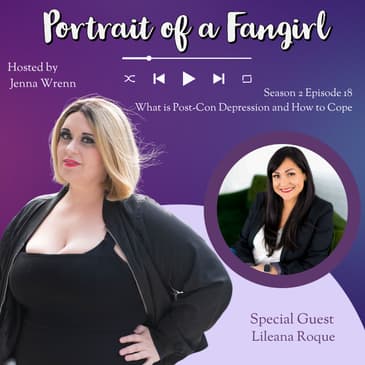
Therapist Lileana Roque delves into the causes and effects of "post-con depression"and offers coping strategies.
The post What is Post-Con Depression and How to Cope appeared first on TEMPLE OF GEEK.
[00:00:09] Portrait of a Fan Girl is a web series and podcast created by Temple of Geek. At the core,
[00:00:14] the project is the importance of telling the stories of women who have found inspiration,
[00:00:18] growth, and power through fandom. My name is Jenna Ren and I'm the host of the Portrait
[00:00:23] of a Fan Girl podcast. And we have a special episode here for you today. We are discussing
[00:00:29] the phenomenon in the geek culture sphere that is known as Post-Con Depression. Today,
[00:00:36] we have two special guests. And the first is our executive producer and the creator of Portrait
[00:00:42] of a Fan Girl, Ms. Monica Duarte and licensed clinical social worker, Liliana Roque. Can you
[00:00:50] please both introduce yourselves to our audience and let us know a little bit about who you are
[00:00:54] and what you do. Hi, my name is Monica. I am the creator of Portrait of a Fan Girl. I'm also
[00:01:05] Latinx correspondent over at that hashtag show. And I'm excited to be here. Hi, I'm Liliana Roque.
[00:01:11] Like you mentioned, I'm a licensed clinical social worker. I'm a psychotherapist going on almost 12
[00:01:17] years. Most of my training is in complex traumas, but I dab on a little bit of everything.
[00:01:25] Okay, so we'll get a nice, nice rounded view of the mental health sphere. Definitely.
[00:01:33] So, Liliana, the reason that we wanted to have you on today is to get your expert opinion on the idea
[00:01:39] of the Post-Con Blues. Now, it's obviously it's not a technical term. It's not something you're
[00:01:44] going to find in, you know, the DSM. But within the community, it's something that's pretty
[00:01:51] well talked about. And it's this feeling of intense sadness coming off of something like a
[00:01:57] big comic convention or sometimes you hear about it with music festivals or concerts. These very
[00:02:04] big events that people gather for. There are some articles on YouTube. There's a few things about
[00:02:10] it on the internet, but honestly, there's not much discourse happening about the Post-Con Blues.
[00:02:17] It's something for me at least that I've only heard, you know, word of mouth by talking to
[00:02:22] friends and saying, oh, you know, I'm back from this. I have the Post-Con Blues, but there's no
[00:02:27] actual like literature or reliable discourse on this topic. So I wanted to kick things off by
[00:02:34] talking about the first time that I've ever heard of the term the Post-Con Blues or depression.
[00:02:40] And then I'd love for Monica to jump in and also tell us her experiences. I honestly couldn't
[00:02:44] tell you the first time I heard it just because it's so ingrained in the kind of
[00:02:50] subculture that I'm part of right now. But it's pretty much something that my friends and I all
[00:02:56] talk about when a convention is over, and you see it a lot on, you know, mutuals, their stories
[00:03:04] and say, oh, the con's over now we all have the Post-Con Blues. And I think the time it hit
[00:03:09] me the most and when the idea and the realization that it's not being talked about
[00:03:14] was this past summer in July after San Diego Comic Con. So San Diego Comic Con was
[00:03:20] something that Monica and I had been talking about for probably close to six months before the
[00:03:25] convention. And it was a big undertaking and a really important thing to us. And with a lot of
[00:03:32] milestone moments for the podcast and for, you know, us as creators in general.
[00:03:38] So once the convention was over and these, you know, are the panel that we had ended
[00:03:44] and all the planning that we had put in came to a lull and I got home, it hit really hard. And
[00:03:52] it's kind of like, wow, well now what do I do with myself? And you know, you miss everybody. So it's
[00:04:00] social beings too. You miss your friends. And I think that was the first time where I realized,
[00:04:07] hey, why isn't anyone talking about this? This is, it's hurting me. I'm sure it's hurting other
[00:04:12] people. And what about you, Monica? Well, I want to set up a little bit of context before, like,
[00:04:18] and just kind of talk about like, you know, leading up to the convention, Jenna was talking
[00:04:23] about how much she disliked her regular like nine to five job, how unhappy and like how it was
[00:04:28] like kind of like sucking the energy and the life out of her, right? So all this fun stuff
[00:04:34] in planning and everything going into it, it was like the distraction from that it was like,
[00:04:40] you know, something to look forward to like this big event. And so there was a lot of different
[00:04:46] layers that were adding to this. And then at this convention, Jenna was kind of like a little bit
[00:04:53] of a superstar because she had built these relationships that over the last two years,
[00:04:58] she's built relationships with PR people with different like people she's worked with in
[00:05:02] the industry. And it was all coming together in person where like a lot of this had been
[00:05:07] virtual. She was getting a lot of praise for like her work on the podcast, her community building.
[00:05:13] And then she was a panelist at San Diego Comic Con, which is not a small feat,
[00:05:17] like it's not easy to be a panelist at like the industry's like biggest event.
[00:05:24] You know, so it was a big deal that Jenna was there. It was a big deal. It was her first
[00:05:31] time there and she was not only a panelist but interviewing celebrities being treated out by
[00:05:37] like studios and things like that. She came as like a name with brand recognition and a lot of other
[00:05:43] things. And the planning was intensive and stressful to get to this point. And while she was there,
[00:05:51] she got to experience like all the people that she had made connections with in person. It was
[00:05:56] fun. It was exciting. It was nonstop. And it was a week worth event. It was like Wednesday
[00:06:01] through Sunday. And you know, and this is like a lot of people should only see once a year. It's a
[00:06:07] big kind of party environment too because the afterlife at San Diego Comic Con is every night
[00:06:11] is like a different industry party and this and that. And so it's not just I went to a convention
[00:06:18] and then I was sad. It was like this was a big deal. And the other time that I've seen it
[00:06:24] like very clearly like in a friend was when we went to a convention called Gallifrey one.
[00:06:30] It's a doctor who convention and a gentleman reached out to me via Instagram. We followed each
[00:06:36] other because of cosplaying things like that. And he was like, Hey, I'm thinking about going
[00:06:41] to this convention. I don't know anybody and nobody in my friend group wants to come with me.
[00:06:46] My girlfriend doesn't want to come with me. Like because it's this niche, like nerdy geeky thing
[00:06:51] that where nobody like really got his enthusiasm. But he's like, you know, maybe we can be friends.
[00:06:56] And he had reached out to me and to my husband and was like, you know, maybe we can be friends.
[00:07:00] And I was like, Yeah, we'll see you there. And first night we run into him. And since that we
[00:07:06] were like inseparable. We had this big huge weekend of like a party excitement. And there he
[00:07:12] didn't have to explain his passion, his love, his excitement for something. He was already in
[00:07:18] the crowd of like minded people who was already there. He already like was expected for who
[00:07:24] he was unapologetically. He didn't have to hide it or tone it down or anything. He could just be
[00:07:30] himself. And then suddenly he made all these new connections, all these friends. It was like this
[00:07:34] big fun time. And then on Monday, he went back to nobody understanding him, nobody getting him,
[00:07:40] nobody like really like feeling what he was all about, right? And the same thing kind of happened
[00:07:46] to me when I first experienced it. And since I haven't had it as badly because now I work
[00:07:51] in the community in the industry. So it's a little different for me. I'm always in it.
[00:07:57] But when I was about 30 years old, and I started going to conventions, it was the first time that
[00:08:04] I was like, Oh, I don't have to hide how geeky I am. I don't have to be like,
[00:08:10] I was never bullied for being a geek or anything like that. Nobody ever treated me bad.
[00:08:14] But also nobody really got it. Nobody really understood. And they were just kind of like
[00:08:19] it was tolerated. It wasn't like celebrated or anything like that. But when you go to a convention,
[00:08:24] you are celebrated and people are like, Wow, like this is so great that you love this thing and blah,
[00:08:29] blah, blah. And it's like a lot of excitement. So afterwards, when I go back and nobody gets you,
[00:08:34] you're just like, Oh, so that's basically our experience and kind of what we wanted to hear
[00:08:41] your feedback from why are we feeling these things so intensely? And like, what can we do to
[00:08:47] kind of like minimize cope? I don't know what the word is. Yeah, absolutely. I have heard of
[00:08:55] similar experiences and usually refer to it as the post event blues or post conference let down.
[00:09:01] So it's common when you're transitioning from something that's super high stimulating or
[00:09:05] just really fulfilling to have to go back and engage in a regular day to day experience, like
[00:09:11] the high to the low, it's just a really, really impactful difference in transition.
[00:09:18] I'd even go so far as to say like a lot of musicians feel the same thing like when they're
[00:09:23] performing and few things compared to that like outside of performing. So a lot of times they
[00:09:30] struggle for them to help for similar reasons. Is something chemically happening? Is it a release
[00:09:37] of endorphins when you're at these sort of events? Is there an explanation that way as well?
[00:09:43] Oh, absolutely. All the happy things are happening there and it's also concentrated
[00:09:48] and then there's so much build up to it, right? With anything that is exhilarating,
[00:09:53] you know, there's a lot of dopamine happening and some people have their natural dopamine
[00:09:58] and some people have to get it stored by, right? So we just have to be really aware of
[00:10:04] how we get our dopamine and be sure that we are helping it live a lot of its own in a healthy way.
[00:10:11] This happens in the cosplay community a lot is where they're looking for their validation that
[00:10:16] they don't get anywhere else in life, right? But when they show up on the floor and they're wearing
[00:10:20] this amazing cosplay and they're getting recognition and things like that, they're
[00:10:25] finally feeling good about themselves. They have this external validation that they
[00:10:29] didn't have before. So now they're feeling good and then they go back home and everything's the same
[00:10:36] and so like, I don't know, I feel like something with self-worth is somehow tied to this. Like,
[00:10:42] I don't know how you see that. I mean, absolutely. What you were describing earlier,
[00:10:46] most people like get people's hobbies, right? But most people aren't invested equally into
[00:10:52] other people's hobbies. So once you find a community that is it enables each other
[00:10:58] and encourages each other, right? And then there's also competition. There is also a lot of external
[00:11:04] validation that's going on, right? That is addicting. And if you don't have sort of a well-rounded
[00:11:11] healthy distractions, well-rounded support system, it can be really hard to go from somewhere where
[00:11:17] you're getting all this praise or you're putting in all this effort to be validated in, right?
[00:11:23] And then transition to something that's all or none. It's important to be aware of how much
[00:11:31] effort is going into that external validation so that you can do your own self-work and make sure
[00:11:36] that it's not, you know, your self-esteem isn't solely relying on that external validation.
[00:11:41] It's important to, you know, in addition to the con which is like the biggest event, right?
[00:11:46] It's an absolutely normal thing for parts of our self-esteem to come from different things,
[00:11:51] right? We can't have good health theme exclusively internal, right? Some of it does come from outside
[00:11:58] factors and that's totally okay. We just have to make sure that we have enough self-awareness
[00:12:01] to know how much is coming from outside things and hopefully try to do what we can to balance it,
[00:12:07] right? Be proud of all the work we put into, you know, making those costumes and
[00:12:12] being at those events but also not being dependent on the response you get from those,
[00:12:19] you know, people praising the costume or criticizing the costume because if we focus too much on
[00:12:24] external validation, obviously it's going to be real subjective and it can be really fickle.
[00:12:30] So for people who are struggling that way in only getting their validation from these big events,
[00:12:38] is there, do they run the risk of kind of creating two selves?
[00:12:44] I don't know that I would call it two selves so much as not being your genuine self,
[00:12:50] the majority of the time, right? So I think things like, you know, Temple of Geek and
[00:12:56] Portrait of a Fan Girl, right? Like there's one big umbrella for it but depending on your
[00:13:01] specific niche, like being a fan girl, right? Like you have an outlet. So
[00:13:08] to just be healthy, we have to be our most genuine selves, you know, the majority of the time
[00:13:15] and that's us embracing it, that's other people embracing it, right? So when you only have that
[00:13:20] one thing, all your eggs are in that basket, right? You don't get to be your authentic self
[00:13:26] and that's detrimental. It can be detrimental to mental health.
[00:13:30] And then I wonder like does this kind of have like the same feeling as like people who are,
[00:13:37] you know, doing things for milestones. For example, like, you know, getting validation from
[00:13:42] getting married, buying a home, you know, having a big wedding, having kids and parties and things
[00:13:48] like that. Like is that kind of similar or is that something different?
[00:13:53] People who work the circuit, right? I think they could be really susceptible to it
[00:13:59] because they start off with a website and then a podcast and then they have their own panels
[00:14:06] and then they're interviewing and it's just, you know, those milestones and that little achievement
[00:14:11] can be very addicting. And again, it's perfectly fine to have those things as long as outside
[00:14:17] of those things, you also have things that are, if not equally fulfilling, just fulfilling in
[00:14:23] general. I think socially as grown-ups, we don't have hobbies, right? So people who have
[00:14:30] these really specific interests or really big interests, they don't get enough credit for
[00:14:35] actually how healthy it can be, you know, the more hobbies or I call them healthy distractions
[00:14:40] that we can have, the better we need at least this is my thing. Everyone needs at least seven
[00:14:48] healthy distractions, seven things that they can do predominantly alone. So sometimes you can
[00:14:55] involve other people, right? Going for a hike or going to a convention or whatnot, but the majority
[00:15:00] of things should be things that you could do alone on a Tuesday night or a Saturday afternoon
[00:15:06] that isn't incredibly expensive or reasonably priced that you can afford to wait to next
[00:15:11] payday to get some part of it or something like that. So for example, like with working out, right?
[00:15:19] Would that be like a healthy distraction, for example on top of things or like you said going
[00:15:24] to a hike or maybe like crocheting while watching TV or something like that, right? Like, oh yeah,
[00:15:29] absolutely, absolutely. Like we need to do as many things that reasonably that we enjoy
[00:15:36] and create feelings of joy and satisfaction to maintain like our mental health. And unfortunately
[00:15:44] in our society, grown-ups aren't really allowed to have things that they do just for fun, for no other
[00:15:48] reason than because they like it and you know, it creates feelings of joy and satisfaction.
[00:15:54] It's funny because I was actually discussing this upcoming talk with my cousin and I was telling
[00:16:00] her about, you know, the topic and she says, oh, we call that the post concert depression
[00:16:05] because she attends a lot of concerts. So I never really thought of it in a way of being
[00:16:13] actually well spread among the community in all different senses. I mean, I guess, you know,
[00:16:21] it could be something that happens if you go to a big sports game. It's this...
[00:16:27] Well, actually in everyday life, so after birthdays, after the holidays, after anything
[00:16:33] that's been built up, there's going to be this moment of peak, right? And so nothing really compares
[00:16:38] for after it. So the more meaningful something is for us, the more, you know, we're gonna
[00:16:46] feel the effects once it's passed and then what? The what do we do next is actually not a bad
[00:16:54] question to ask. It's a healthy question to ask to figure out what can you do next so that
[00:16:58] you can just maintain healthy self-esteem and have healthy outlets. So how do we differentiate
[00:17:06] between normal sadness after an event or something of the kind and depression? There's definitely
[00:17:14] depressed feelings associated with that, right? And I don't want to split hairs as far as like
[00:17:19] depression and just, you know, post event blues, but definitely if it's harder to find joy in
[00:17:26] anything else. If it's affecting any kind of functioning, so like just getting out of bed daily,
[00:17:32] you know, life activities, if it's affecting work and if it's affecting friendships,
[00:17:36] if there's any kinds of thoughts of hopelessness or worthlessness, you know, having great social
[00:17:41] thoughts, like then we know it's a little bit more than just being bummed out that like you
[00:17:46] lost that high of that really fun event. If it's disrupting daily life in some way,
[00:17:54] then it's something worth talking to someone, you know, a professional about.
[00:17:58] So how do we know that going to conventions and attending these events isn't just
[00:18:04] me trying to escape or distract myself from the regular anxieties of the world or depressions
[00:18:11] or maybe feeling? Something is a healthy distraction, right? When it adds more value to our
[00:18:17] overall well being. It's an unhealthy distraction when it impairs our functioning, when we're avoiding
[00:18:27] things when we're you know, not doing the things that we're supposed to be doing. So
[00:18:36] a little bit of distractions, we're anxious isn't always a bad thing, right?
[00:18:42] If we're using it to completely avoid something that's really important to do,
[00:18:45] then that's not healthy, right? So along those lines, what are some coping
[00:18:49] mechanisms that people can use to try to mitigate these feelings of depression that could come after?
[00:18:59] Hopefully this doesn't sound a little bit too cliche, but honestly,
[00:19:04] all the things that we should be doing on a regular basis to just kind of keep our mental
[00:19:08] health in check, right? Being aware of our anxiety and where it's coming from, being
[00:19:16] able to do things to relieve those feelings, not suppress them, right? People always throw out
[00:19:23] like meditation. Someone who's anxious doesn't know how to meditate, okay? But someone who's anxious
[00:19:29] might get a little bit of that nervous energy out when they go for a run or even for a walk,
[00:19:34] right? Again, not to sound cliche, but breathing is everything because when we are not breathing,
[00:19:45] we are not getting the oxygen we need to our brain, so then we can't think straight.
[00:19:50] So it's important to regulate our breaths. That helps regulate our nervous system,
[00:19:56] and that helps mitigate a lot of those anxious symptoms.
[00:20:03] Having consistent social outlets, having a support system really helps.
[00:20:15] Having balanced healthy distractions, and again, I'm afraid not to sound too cliche,
[00:20:23] but sleeping. I don't think enough grown-ups realize that like if you're not sleeping,
[00:20:29] if you're not getting the rest you need, everything else is going to be affected.
[00:20:34] Everything else is going to suck, and if we're coming down from a really big high
[00:20:39] and not sleeping, right? Things are just going to suck a little bit more. So regular healthy routines,
[00:20:47] being self-aware enough to sort of know if there's anxious symptoms or full-blown anxiety that you
[00:20:54] might need some help talking through with a professional. Oh, you mentioned something about
[00:21:00] like releasing anxiety versus suppressing it. What does suppressing it look like?
[00:21:06] A lot of people have such a stigma against being sad or being down, and they're just like,
[00:21:12] I'm not going to do that. I'm going to be positive, right? I actually have a huge bias against
[00:21:18] like positive thinking because I don't think it's practical. Usually the neutral place to go is,
[00:21:26] you know, what is fact, what is true. And if something is sad or sucks or it's whatever,
[00:21:33] it's allowed to be that thing. So allowing yourself a reasonable amount of time to be sad, right? Or to
[00:21:40] be upset about something is allowed. Forbidding yourself from feeling the negative things
[00:21:47] isn't a healthy outlet or not outlet. Forbidding yourself from feeling the negative things
[00:21:52] is suppressing it as opposed to reasonably allowing yourself to sort of process any of those feelings.
[00:22:01] On the other end, I would say or rather, what am I trying to say? Another part of that is
[00:22:07] the healthy distractions, right? People say, oh, well those are just avoiding issues and I'm like,
[00:22:12] not actually because as long as they're creating feelings of joy and satisfaction,
[00:22:18] then it's not avoiding, right? Have you ever noticed that when you're in a good mood,
[00:22:22] you just handle things better? So your brain is still processing all the things that you're
[00:22:29] thinking and feeling, but when you're actually doing something that creates feelings of, you know,
[00:22:33] fulfillment or joy, you're just processing it with a better perspective, essentially. You're not
[00:22:39] going out of your way to like avoid something, to suppress something, not think about something.
[00:22:45] You're just focusing on something that you really enjoy. And like that's allowed.
[00:22:51] And that's actually helpful. Coming from the mental health side, are there specific therapies
[00:22:57] that are particularly effective for people who are suffering from depression triggered by an event?
[00:23:05] That's an interesting question. I'm going to start off by saying that
[00:23:10] while there are modalities out there that in theory could, you know,
[00:23:14] really help with certain diagnoses or whatever issues might be dealing with,
[00:23:19] ultimately the best modality is going to be whomever like you're working with,
[00:23:25] what they know and how they can explain it the best that they can.
[00:23:30] But that's a long-winded version, right? The more complex origin.
[00:23:34] Up front I can say, yeah, CBT. So like things that focus on thoughts, behaviors and emotions,
[00:23:39] like that's one modality that can be really helpful. Interpersonal therapy,
[00:23:45] because that just kind of helps with communication and figuring out
[00:23:50] like your position amongst, you know, your support system, those communities that you're
[00:23:55] involved with and being able to better articulate your needs in those interpersonal relationships,
[00:24:01] right? Just being able to have someone to talk to and say things out loud too
[00:24:08] helps our brains process, you know, what we're thinking and feeling. So that just
[00:24:12] in itself is really helpful. I find sometimes too that like sometimes when I'm caring a thought,
[00:24:18] it's like so heavy and it's wearing on me or whatever. But then when I say it out loud,
[00:24:23] it's like, oh, isn't that bad? Like, it's like, I just let it out, like actually saying it to
[00:24:28] somebody versus just letting it ruminate in my head. Absolutely. So this is,
[00:24:35] that speaks to the reason like journaling and therapy in general work.
[00:24:40] In our brains, there is just no rules, right? We can see the most outlandish absurd things and
[00:24:45] there's nothing, you know, policing it so that can really impact our mood, our thoughts, our
[00:24:50] perspective, everything, right? The minute we put our thoughts down on paper, or once we start
[00:24:56] saying them out loud, there's rules, right? And so we are forced to finish our thoughts.
[00:25:01] We're forced to say things more accurately. And it's not just this insane catastrophe,
[00:25:07] right? In our brains. So essentially, that's why journaling, that's why therapy works.
[00:25:14] I have a story that I feel like goes in with this, but I don't know how to fit it in. So
[00:25:19] I'm going to just ask it and if it works, it works. If not, I'm going to tell it and ask it.
[00:25:25] So with Sanio Comic-Con, for instance, when Monica was discussing how big of an event this was
[00:25:31] and how the crash down could be very easy. I'm taking back to a specific memory of literally
[00:25:39] when I was leaving, driving out of San Diego within like 10 minutes, I could feel...
[00:25:48] And I do suffer from an anxiety disorder, but I could feel like a panic attack coming on.
[00:25:53] And luckily, I am aware of myself enough to go, this is adrenaline wearing off. This
[00:26:03] is a part of this high and low that kind of controls people's feelings when it comes to these post-con
[00:26:14] anxieties and depressions. Oh, absolutely. It's the same with the runner's high and,
[00:26:20] you know, again, that dopamine is everything. And it's good that you are self-aware and
[00:26:25] understand where that's coming from, right? In an ideal situation, knowing that you have some
[00:26:30] anxiety, knowing that those conventions create such high highs, right? It would actually be a
[00:26:36] really good idea to incorporate times when you're doing check-ins with your own body,
[00:26:40] with your own nervous system and being more self-aware too, be able to
[00:26:44] regulate your nervous system a little bit more throughout the conference. So that maybe
[00:26:49] that adrenaline will get so carried away. How long can people really expect to feel this way?
[00:26:57] Is there a typical timeline that one can expect for, I guess you could call it recovery?
[00:27:04] That's going to be determined on a case-by-case basis, right? Because some people who have a
[00:27:09] little more support or maybe have a little more well-rounded activities or social outlets
[00:27:15] might not fall as hard, right? Or if they do fall hard, there's supports in there to sort of
[00:27:20] catch them on the way down. There's other people who don't get as high up during that time as others,
[00:27:29] right? So they don't have to come down as much. It's going to be... there's so many factors involved
[00:27:34] in that, in determining that, right? So there shouldn't be a timeline put on it. The focus
[00:27:41] should definitely be put more on making sure that you enjoy other things, making sure that
[00:27:48] that you're not having any negative thoughts of hopelessness or worthlessness
[00:27:51] and that none of your daily functionings being impaired. Because that's... I mean, it could last
[00:27:57] right? Like six months. But if you're still functioning going to work then that sounds more
[00:28:04] like being a little bit of a Debbie Downer, maybe a little bit pessimistic. But if you're
[00:28:09] functioning then it's just... it just is. Right? And now following up on that,
[00:28:16] what are some signs that that depression might be getting worse or is that a point where somebody
[00:28:21] should actually seek additional help? Affecting daily functioning is definitely a big marker,
[00:28:27] right? Because it's one thing that after the post-con event, right? You might be a little
[00:28:33] bit down and even a little bit tired for a little bit after. And you don't want to go out and that's
[00:28:40] fine, right? The problem comes when you want to go out and you can't, right? So when there's things
[00:28:47] that we need to do or want to do and we don't find ourselves capable of doing it then it's
[00:28:52] definitely worth talking to a professional just to sort of see, you know, where you're at and
[00:28:57] if... preventative care more than anything. I think with most things, if someone just kind of feels
[00:29:03] validated then things are easier to cope with. So being encouraging for them to do whatever they
[00:29:13] need to feel better whether that's seeking professional help or just getting Mechak out there
[00:29:18] with their geek squad, whatever that might look like for them, right? Making sure that
[00:29:25] they're spending quality time. If not, you know, you're not spending quality time with them, that
[00:29:28] they're spending quality time with somebody avoiding judgment or criticism because just because,
[00:29:33] you know, they don't feel the exact same way. Does it mean that they can't
[00:29:37] empathize and understand how big of a deal it is for, you know, the person that they care about?
[00:29:43] At the risk of sounding like a broken record, but it is, you know,
[00:29:48] in most of my therapy that I've ever done, it's encouraging having the social connections,
[00:29:53] the creative outlets, the professional support, goal setting, things that you're looking forward to,
[00:29:58] healthy lifestyle and just those healthy distractions. You know, the more aware you are
[00:30:05] self-aware you are, the more you can prepare, the more you can do your best to address any issues.
[00:30:18] You know, there's also this like other side of where like you're building up an event, right? Like
[00:30:23] or building a cosplay or something and it doesn't go the way that you wanted it to. Right? You've
[00:30:30] been building this up for so long and then everything that could have gone wrong does go
[00:30:35] wrong and it's like this huge letdown. Like how do we avoid kind of like spiraling into like
[00:30:42] negative thinking or negative thoughts or something unhealthy?
[00:30:47] More often than not, how we do one thing is how we do everything. So if you're somebody who
[00:30:54] organizes an event and needs every single thing, you know, in order, if that's probably how you
[00:31:01] are with most events, right? You're someone that needs a lot of planning, like it's not going
[00:31:06] to be in an isolated situation. So for example, it sounds like what you're saying is like if
[00:31:12] you are somebody who is, you know, being really let down by this event because it didn't go
[00:31:17] perfectly, it's not probably just an isolated, it's like you probably are easily let down by
[00:31:23] other things in life. Like yeah, I mean if you're type A, you probably know it, you know? And if
[00:31:29] there's a lot of pressure on this really big event, it's just going to be worse. I think,
[00:31:33] you know, calling a spade a spade is also important and I don't, I want to stress that a lot
[00:31:38] of our idiosyncrasies don't have to be diagnosable because honestly, if someone's super type A, right?
[00:31:44] And really high strong and all those things but it's helping them in their life, they're functioning
[00:31:50] well and they're doing well with it, right? Then it's not a problem. It might bug other people,
[00:31:56] but that's their problem, right? So it's only when the person in question is not okay
[00:32:04] because of those things that it becomes a problem. Do you think that the fact that there really
[00:32:10] isn't discourse on this in, you know, specifically in the terms of this conversation and this podcast
[00:32:16] within the geek community? Do you think that since there's not this discourse
[00:32:22] that people aren't necessarily seeking out the support that they need? Oh absolutely.
[00:32:29] First and foremost, major props to you guys for even delving into this conversation
[00:32:36] because like we said it's not just at big events or concerts. It's also after Christmas,
[00:32:41] after your kid's first birthday, after, you know, actually after like once you give birth even,
[00:32:46] right? Whenever there's a lot of build-up there's going to be issues and thankfully we're
[00:32:53] actually coming to an age of a lot more self-awareness. The mental health field is
[00:32:57] definitely getting, you know, creeping itself into different aspects of life and that can only help us all.
[00:33:06] Right. And it's we all need it. We all could use the album, sure. Well, Liliana, this has been a
[00:33:15] really great conversation and I think you have highlighted some points that really need to be
[00:33:20] talked about in not just the geek community but the communities as a whole. Really thank you
[00:33:27] for coming on today and sharing your expertise with us. Thank you for having me and again,
[00:33:33] major props to you guys for tackling the issue.