
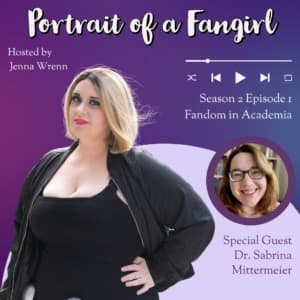
In the season premiere of Portrait of a Fangirl podcast, host Jenna Wrenn spoke with professor and at Germany's University of Kassel, Dr. Sabrina Mittermeier.
The post Fandom in Academia With Dr. Sabrina Mittermeier appeared first on TEMPLE OF GEEK.
[00:00:00] Purchase of the Fandril is a web series and podcast created by Temple of Geek. At the core of
[00:00:15] the project is the importance of telling the stories of women who have found inspiration,
[00:00:19] growth, and power at your fandom. My name is Jenner Ann and I'm the host of the Purchase
[00:00:23] of the Fandril Podcast. Today I have the pleasure of talking with Dr. Sabrina Mnmire how
[00:00:28] are you today, Sabrina? I'm good. I'm doing great. I'm super excited to talk to you today. I know we've
[00:00:35] been touching base back and forth for a few months now and it's great to have this finally happen.
[00:00:40] Yeah cool. I'm excited. Can you just please introduce yourself a little audience no
[00:00:48] bit about who you are? Yeah so I'm a postdoc at the University of Kassel in Germany which is a
[00:00:56] fairly small university. I teach American history there in American culture and so I do a lot
[00:01:03] of pop-tier culture studies which is also what I've most published on. I wrote my PhD thesis on
[00:01:10] a cultural history of the Disneyland theme parks which is also a monograph. Now you can actually get
[00:01:16] for free online. It's shameless black because I've also edited a bunch of collections to do a
[00:01:22] popular culture and there's also another one in Disney called Fan Phenomenade Disney that came
[00:01:26] out last year and it did a bunch of work on Star Trek, did a book on Star Trek Discovery
[00:01:32] and then one of the co-editors of the Rada Chan book of Star Trek and yeah so I generally do a lot
[00:01:38] of TB theme parks film that kind of thing. So for your... I just thought of this you said you know
[00:01:45] dissertation was on Disney parks so was a lot of your research in person? Did you get to go to the
[00:01:50] parks a lot? Yeah obviously I did and I mean I still go like even if I just go for Fan
[00:01:56] again but yeah I've been to all of them. Like in Europe everywhere and did you go to
[00:02:03] come everywhere? Yeah everywhere because I wrote about all of them so I think in 2016 I visited
[00:02:09] all of them in the same year. Oh my goodness that's a busy year. It was a busy year which wasn't
[00:02:15] planned like that but then they delayed the opening of Shanghai Disney and so I had to push my...
[00:02:20] Like I did a trip where it took your whole college Shanghai and one trip and I had to push down.
[00:02:25] It was supposed to be in 2015 and then yeah. Yeah of course well it's really interesting to be able
[00:02:31] to go so in such quick succession though I feel like that really gives you a nice... A nice...
[00:02:36] A nice comparison. A nice comparison yeah so something we always ask our
[00:02:41] ask our guests is how they do the term fan girl and what that means to them? So what do you think
[00:02:47] the term fan girl means and has that changed to you over time? I mean I think there's obviously
[00:02:53] like a negative connotation to it for some people like it's obviously sexist connotation as well
[00:02:59] that you know it's just someone who is maybe overreacting to things or overhyping things and
[00:03:05] is not thinking critically and you know it's very like exuberant so again very sexist connotations
[00:03:13] of like how women are behaving versus allegedly how men are behaving in very binary as well.
[00:03:21] So I mean I think I now embrace that word and definitely a fangle for a lot of things I don't mind
[00:03:28] it's I think when I use it I would use it mostly as a verb so it's like a fangirling for something
[00:03:35] so yeah I mean like on my end it's a good thing it's a fun thing but I do know that a lot of people
[00:03:41] don't agree. What are you currently fangirling over? Ted Lasso always for the last three years
[00:03:51] if I'm depends not stop since it's first year. I know our producer Mike loves Ted Lasso and I actually
[00:03:58] haven't watched it yet yeah you're like you would you would be surprised I mean I think it's still
[00:04:04] comparatively to other things obviously a smaller fandom even though I feel like over like the
[00:04:09] course of season three it's grown in certain ways if there's been a lot more engagement on
[00:04:14] things like airspeed like fanfic and fan art and all of that good stuff but yeah it exists
[00:04:21] and as per usual it's a bunch of queer women you wouldn't maybe expect from a show about
[00:04:27] though I'll essentially about football but yeah it's there sorry. I definitely have to check
[00:04:33] that one out it looks like you know and once you you know how the algorithm works on Instagram
[00:04:38] and stuff and once you kind of like click one post about something it shows up everywhere so I keep
[00:04:42] seeing it and like maybe I need to check it out. Yeah you should yeah. Can you tell me a little bit
[00:04:49] about what the discipline of fandom studies is? So yeah I think there are fans studies now and I
[00:04:57] mean I say now there's been fans studies and this is important for about 30 years and I think the
[00:05:04] difference is that when it started to be a thing there were a bunch of works mostly by Henry Jenkins
[00:05:11] who was sort of a trailblazer in the field that definitely do come mostly out of cultural studies
[00:05:18] and I think by now we can almost speak of it as its own distinct field that's very much connected
[00:05:24] to cultural studies but that has its own like methodology that has its own like
[00:05:29] foundational literature that's been also expanded to really in those 30 years and I think
[00:05:35] especially over the last five to ten years so yeah it's very much a thing and maybe unsurprisingly
[00:05:42] it started with the city Star Trek fandom because like as modern fandoms go that's still one of
[00:05:48] the biggest fandoms there is and one of the most foundational ones in terms of how fans engage
[00:05:53] with each other I mean there's there were Star Trek fanzines in the 60s. There were Star Trek conventions
[00:05:59] in the 70s and the 80s and ever since and that's also what Jenkins looks at mostly and then
[00:06:05] when they say Star Trek is also the origin of Sasha with Kirk and Spock so it makes sense but now
[00:06:12] obviously like there's so much more and it's also not I mean as with anything in academia it suffers
[00:06:18] from Eurocentrism like she's from a very like nearer look on some things but that's also started to
[00:06:26] you know like this was criticism of it it started to change so yeah there's a very very
[00:06:32] robust body of work of fan studies in academia and the unfortunate thing is that because it's
[00:06:40] still so connected to cultural studies I think that a lot of disciplines to do similar work
[00:06:45] overlook that work or we're not talking to each other like sociologists for quite obvious reasons
[00:06:50] do a lot of work on like you know humans engaging with each other and like can then how that
[00:06:56] works and I think they do the different because they tend to do like studies and quantum different
[00:07:00] methods or whatever but I think we would benefit from each other but um there's sort of a joke
[00:07:06] that every five minutes is sociologists and fans fan studies because they're not aware it's already
[00:07:11] tight but like being since part of my background is I mean my background is American studies but
[00:07:17] also more specifically history and that's the other issue that like friends and historians don't
[00:07:23] read cultural studies still like a lot of them don't and and specifically fan studies then
[00:07:28] completely gets overlooked and they're like you know and you're you're missing it's one of the
[00:07:34] ways you can engage with how people actually react to anything in the world and just happens to be
[00:07:40] fandom but I think there's a lot of metathodology you could use for so many other things but anyway
[00:07:44] it exists it's ever growing and there's a lot of benefits to it I think for also other disciplines
[00:07:50] and other things to get that aren't necessarily just you know fan pop culture texts or whatever
[00:07:57] right I feel like there's a big divide because I mean at least in my experience but I was in graduate
[00:08:03] school I remember my mentor telling me oh you could take your course of study that you're planning
[00:08:07] on writing your dissertation on and you can market it to more of the entertainment field as opposed to
[00:08:15] academia instead of there being a mesh of combining the two you know why can't something be
[00:08:21] be alluring to the menaces and also work in academia and it doesn't really go that way does it
[00:08:28] no and I think that's a mistake because on the one hand everyone's always like well you know my book
[00:08:33] will be read by two people yeah maybe then do something else with it like I think the thing is if
[00:08:39] you write on something made Disney and Star Trek you do have an audience quite obviously that's
[00:08:43] outside of academia just generally because people who are in these fandoms tend to read things
[00:08:52] that are maybe out of their usual like comfort zone of reading so they're very willing to read
[00:08:57] nonfiction but then it has to be written in a way that's more accessible just because like you
[00:09:03] don't want to throw around jargon just I mean you can use it but you need to like do it in a way
[00:09:10] for to make it accessible to people who have not like read tons of like I don't know post-modern
[00:09:16] theory or whatever and I think yeah and I mean especially also history like history could
[00:09:22] should be so accessible because it is actually a lot of time jargon for your can be and yet
[00:09:28] many people manage to write it in weird way and I think that's even worse in German than in the
[00:09:34] syn English to be fair I think the way academic English oftentimes works is already more accessible
[00:09:42] than academic German as to a standard German audience but still like there's just people who
[00:09:51] tend to write very complicated when they really don't need to do this absolutely and it can come off as
[00:09:57] you know especially with history I feel like the connotation immediately is oh it's dry it's so dry
[00:10:03] it's really you know and I mean I also have my history nerds you can't go like I think we're the two
[00:10:08] people you were history nerds you can't ask us because we love it but for somebody else who's not
[00:10:15] necessarily part of like academia it's it's almost daunting you know and welding it I mean and
[00:10:23] even I don't necessarily use history books with fun of course I've read history books but with
[00:10:29] the purpose of citing them and that's the problem right even if I am not you know I am not necessarily
[00:10:38] like drawn to reading my colleagues books which might be a mistake because there are more people who
[00:10:46] write like this but yeah it's still like in my mind it's obviously needed to be worked even if
[00:10:51] it's not on the subject matter that I actually like work on so and I mean I think that's also changing
[00:10:58] there is a broader market for nonfiction obviously like every time you go into a big book store now
[00:11:03] this like you non-fiction releases it just depends on how are you how you approach it and how you
[00:11:10] do this stuff and especially pop culture stuff like of course people would read that like you know
[00:11:15] don't make it so complicated but because most people have to write their books for
[00:11:21] detainee or process or there are other qualification processes it's yeah it gets lost somewhere
[00:11:27] because that's their main purpose of writing rather than engaging with an audience right I think
[00:11:33] that something that I always found really fun was when Hamilton came out because it kind of
[00:11:39] brought this like resurgence of people or people were like oh American history can be fun this is
[00:11:43] really cool and then they were buying up the book and I was actually in grad school the time
[00:11:50] and I didn't want to read the book like I didn't want to sit down and read that book but it made
[00:11:55] you want to you know going to see that musical or listening to music meet you want to pick up this
[00:11:59] book yeah and I also have not read it because it's massive and swan churno but yeah but it was an
[00:12:07] interesting phenomenon to see people just like re-flung churno right and and again that's the
[00:12:13] thing like you know I would like to know how many people actually finished it but it's in all a
[00:12:18] mess it would be a thing I mean if you tell Disney friends your friend's history of Disney and then
[00:12:23] think yeah of course they want to read that and I do think minus a bit more accessible than that
[00:12:27] but thankfully but yeah it's not something that academia necessarily rewards and that's the problem
[00:12:34] what does your course of study look like to you given your research and your course
[00:12:43] you mean in terms of like my history of how I started to do this or yes yeah okay
[00:12:51] what did your journey into mixing fandom and academia look like
[00:12:55] I think it's like a it was always intertwined I mean the reason why I ended up studying American
[00:13:05] studies in the first place was that I spent my childhood and my teenage years watching too much
[00:13:11] television because I'm an only child with two working parents so but I think there was always
[00:13:18] the thing of like being interested in the thing and obviously there was a consideration of like
[00:13:23] full on going into the entertainment industry in some sort and not doing that but American studies
[00:13:30] was definitely interesting because you could study pop culture so I could use the knowledge I already
[00:13:36] had from like having seen so many of these things and being very interested in them to actually like
[00:13:43] watching TV in university and talking about it with other people and reading like theory on
[00:13:50] all of that stuff in the street as in a way that was always a thing and then with the dissertation
[00:13:57] it was also the thing of like okay well you know I think I want to do something on Disneyland
[00:14:02] and then finding out that there was literature but most of it was very old by the time and I
[00:14:08] mean I said old in this case I mean I mean ended this in 2014 started this in 2014 so
[00:14:16] I feel still literature at that point was from the 80s and the 90s and then for whatever reason
[00:14:21] not much had come out since I mean there were a few things but it was very far between very interdisciplinary
[00:14:28] so but obviously yeah I mean as he said like I went to the parks for research but I also had gone
[00:14:33] started to go through the park to the parks for more again years before that's how I got the idea
[00:14:38] in the first place so you can fully disentangle that my interest in it was like sandwich like I
[00:14:44] like going there and that's also why I got a lot of information on it and had like knowledge of
[00:14:49] it in a detail that only like she's fingers would have right but that was useful because you can
[00:14:55] really write on these things if you're not that interested in them in the first place and the same
[00:14:59] goes for like TV or whatever right you need to have a certain like level of engagement and
[00:15:04] understanding to actually do this if you don't know how the industry works how would you study
[00:15:09] television I mean it's read too many papers with that suitcase but right you don't want to get into
[00:15:15] something that's not doesn't grab you either like it makes it a chore and if you're going to be
[00:15:21] spending you know x amount of years of your life working on this research you want it to at least
[00:15:26] be somewhat fulfilling I would imagine yeah and I fully don't understand I mean your occasionally
[00:15:32] obviously get like job upwards for PhD positions that come out of research projects with like a
[00:15:38] set topic that's supposed to be explored and I mean occasionally this like there's a coincidence
[00:15:43] I ended up working in a research project on scene perks that I found after I had already started
[00:15:48] this like that was a lucky coincidence but like there's people who just you know work in a project
[00:15:53] and they have no say over the thing and they just take on the topic and I could never do that
[00:15:57] I would get worked so quickly oh I agree with that is it difficult for you to draw a line between
[00:16:05] being a fan girl and being a researcher I get the question a lot I think as I said there's like
[00:16:11] benefits to to being both or they you know it's helpful to have that engagement with it and I think
[00:16:19] it's that difficult in a way like my my scholar brain is always on yes of course sometimes
[00:16:25] you sit there and you go well you know you have to do you have to do different critical work
[00:16:31] obviously but for instance right now I mean I said a fan girl over Ted Lasso but that naturally
[00:16:37] after this year is led to the fact that I'm editing a special issue on a journal of popular
[00:16:42] television on Ted Lasso so yeah so I'm editing a special issue of the journal of popular television
[00:16:49] on Ted Lasso and and I think the advantage there is that I know the show so well like I know it
[00:16:56] back in front effort the scripts I've done you know I've just engaged with it for so long I've seen
[00:17:02] it multiple times so if I am editing other people and they get something wrong I will know like
[00:17:09] and that like level of detail I don't think anyone's achieved that maybe watch the show once and then
[00:17:15] twice to write a paper on it right or or you watched it for looking at a specific issue like I would
[00:17:23] have done maybe with a different show like I'm writing something on sex education I've seen it
[00:17:28] once I will watch it again but I will focus on that specific issue when it looks as fine
[00:17:33] but that's the thing right and then also there's other people in this who have a very different
[00:17:38] experience with the show of a different opinion on it who will probably be more critical of it
[00:17:45] in some respects that I might not be with this the thing right and I think you just have to put
[00:17:50] on like the two hats but they still you know intersect and like this there might be something
[00:17:56] that I as a fan or like just as a viewer would be like yeah well you know that that wasn't fully
[00:18:02] ideal and how they handled this issue but I can overlook that because you know there's all
[00:18:07] these other good things but then if you hone in on that critically you might be more critical
[00:18:11] and that's fine right so I think it works as I said there's advantages to it you need to I think
[00:18:18] the important thing is and that's what you do and I could give me all the time it's just I was
[00:18:21] engaged with other people who might see it differently right and and that usually you do that
[00:18:27] also just by citing other literature right you can sit in conversation with other people's work
[00:18:32] on something and then the case of Ted Lasso is there anything yet but then I can still you know
[00:18:37] I can build an older literature on television studies and whatever aspects we're looking at and
[00:18:42] bring that in so that's the thing and you get peer review right if you write something and it's
[00:18:48] too positive or like too uncritical of something some will probably tell you like if it's not me then
[00:18:56] one of my anonymous peer reviewers that were coming at some point and we have all of that so I think
[00:19:02] it's fine and I think it's possible to to separate them sometimes when you need to but most
[00:19:10] see it's helped right yeah you know the idea the peer review it makes you a better researcher and
[00:19:17] especially I feel like when you're going into something like Ted Lasso that doesn't have any there's
[00:19:25] no literature like he said there's nothing on it so how else are you going to build that foundation
[00:19:30] without a critical lens or somebody to point something out to you like that's how you grow
[00:19:36] here and then there's that's a tangent you can also cut but like what if
[00:19:44] recently noticed and what other colleagues have also noticed and maybe we're just getting old and grumpy
[00:19:50] but it's where things like Disney the thing is that obviously a lot of people love it and they want
[00:19:57] to do something on an academically and that's how all of us start like usually don't start from a
[00:20:02] place of like dislike or hate with us you start from a place of like or interest at least right strong
[00:20:07] interest most of the time it means because you like it or you love it and then start looking into it
[00:20:13] and people don't read anymore I have a feeling like a lot of people would also have
[00:20:20] serious systemic issues in academia that push everyone to just publish and publish and publish and
[00:20:25] keep doing more work and doing more conference papers and if definitely done that and you get sloppy
[00:20:30] so you overlook reporting the literature and I think that's especially dangerous sometimes
[00:20:35] with park culture because people just don't look and they don't read into disciplinary so they
[00:20:41] they think oh it's neat to look at Disney theme parks and yeah now we finally have a body
[00:20:46] of literature yes in 2014 it was fair but it still found a ton of things it were just not doing
[00:20:51] the same thing as me but it's still needed to engage with them obviously and now in these past like
[00:20:58] 10 years there's been so much stuff and for whatever reason people don't seem to do
[00:21:04] even the most cursory Google scholars are trying more or they do and then they can't get access
[00:21:09] to it immediately and then it doesn't work and again systemic issues are like time and energy
[00:21:14] and access as well to to literature but it's just not the thing the job is to engage with
[00:21:21] ones there and you can disagree with it but you need to engage with it and I think that's a
[00:21:26] skill that for whatever reason just technically and maybe also the training people get in grad school
[00:21:33] I don't know goes away and the willingness to read into disciplinary and this is then when
[00:21:39] you hopefully because there's peer review if it's supposed to be published people come in and peer
[00:21:43] reviewers are the ones who read the whole thing and say well you need to say this I'm sorry but
[00:21:47] you need to say this you just said this you need to say this even if you don't like it that's
[00:21:52] there and if it's not in there that's shuddy scholarship but that's also yeah other things
[00:21:58] that can help build your own and it's supposed to be it's supposed to make it work better that's
[00:22:05] the whole point because it gives you someone else's idea on the thing and someone's thoughts
[00:22:11] and it's like all right the sexier cool and most of the time yes people there's parallel
[00:22:17] thinking and someone will have already done the thing and wanted to do it the most of the time
[00:22:21] if it's on the scale of the dissertation or whatever it's not been done the same way anyway
[00:22:25] so you can still add something to the conversation and that's the whole draw
[00:22:31] so you as you mentioned you've written multiple books and academic articles about Disney theme parks
[00:22:36] specifically what was it about Disney that captured your attention and when did that start
[00:22:43] as a kid so hard to say when they'd really started but I mean I'm born in 89 so it's like so
[00:22:49] many millennials I've grown up with like the Disney Renaissance films like a little mermaid line
[00:22:55] in Beauty and the Beast a lot and all of that so obviously it was always just around
[00:23:00] and then Euro Disney or like has it's been known for a long time Disney and Paris opened in 92
[00:23:08] and I'm from Germany so at some point we went there like my parents took me there
[00:23:13] there's a kid like four or five five I think so not immediately when it opened because it would have
[00:23:18] been too little and so it was always there and also go back to parks and then as I said like when
[00:23:26] I was already in during my degree when in my master's sort of started to rekindle my interest
[00:23:33] in the parks and then my family and I were going a lot my partner at the time we were going
[00:23:39] and just I sort of reignited the interests or the love for the parks that I had as a kid and then
[00:23:46] when I was a teen that had disappeared because when you're a teenager Disney sort of and cool and
[00:23:51] goes away and then so yeah that's yeah it's just always been there I spent so many people like
[00:23:58] Disney is very hard to escape and it was something that I was raised with so great and you know it's
[00:24:05] not dubbed the happiest place on earth for no reason makes you feel a certain way you go there and
[00:24:11] you can kind of forget what's going there also just because I travel a lot by myself and they do
[00:24:18] feel comfortable traveling a lot of places but it's still a space where if you're a woman who's
[00:24:24] traveling by herself you can usually be very safe like there's downsides to it being a secure
[00:24:30] tight place obviously but there's so so upsides like especially if you're in a resort like well Disney
[00:24:34] world like it's just to no care in the world that they isn't the same as if you were in a city somewhere
[00:24:42] even if it's a relatively safe city well and cool yeah you were recently in New York so I'm sure
[00:24:50] that that's a big it's not necessarily yeah I feel very safe in New York City maybe because
[00:24:57] they've been there multiple times and know it well enough I mean it probably doesn't mean everywhere
[00:25:02] in New York City but like certain places feel very normal to me it's like I mean obviously like
[00:25:09] upper east side upper west side of the city is also well well of neighborhoods but you're like
[00:25:14] mid like if you're in midtown after 10 p.m everyone is there it's just so crowded I don't feel unsafe
[00:25:21] where the subway or whatever sorry yeah anyway attention but like yeah it's never
[00:25:26] in New York is fine I mean from New York I live here I live an hour away from New York City so
[00:25:32] I used to work in the city and it's like in and out every day you kind of get you kind of get used
[00:25:36] to it you know but it's not like Disney world so you that much how did you decide to turn your
[00:25:43] love for theme parks into course study I mean just I think figuring out that there wasn't that much
[00:25:51] literature or that much academic engagement especially compared to films which obviously
[00:25:56] also has to do with the fact that you do have to go to theme parks to study them and not everyone
[00:26:01] has demands to do so and because they were easily dismissed as like oh mass entertainment blah blah
[00:26:07] goodbye which obviously also goes for Disney films but at least like film studies as a discipline
[00:26:13] is to establish by now that you know that was less questioned and animation as well
[00:26:19] so yeah it's basically that and it's they're very interesting in like multifaceted places right
[00:26:27] and half that media studies aspect of like what we call like trans media or like intermedia whatever
[00:26:34] you want to put it in terms of the academic terms but yeah it's just they're interesting
[00:26:40] they're always changing there's always something new there's always something going on they can
[00:26:43] very much go with a certain side guys as well because they always have to adapt to what's cool and
[00:26:50] what's interesting to people right now so what sort of research are you currently working on
[00:26:56] and what do the primary sources look like well and this is there's some work on to last
[00:27:03] or this some some broader just you know type projects like there's always something that does not
[00:27:09] necessarily the main focus of my research but that's there there's a book on
[00:27:14] the musical history of New York that for whatever reason I started to do with a friend of
[00:27:19] his own musicologist so she can bring that and where I can't I've taught a class on the history
[00:27:24] of New York so that sort of happened in the same way but my main research project is supposed
[00:27:31] to work on and if for various reasons that I never had time to is on what I call or you know
[00:27:38] an unmade career television what it's what it means is about censorship of career television
[00:27:45] it's still very broad because I'm still not as advanced with it as a should be but right now it's
[00:27:50] A. It's transnational it's between the US and Germany but also because we have a very shared
[00:27:55] history of how television works in Germany because it's the post-war and American occupation
[00:28:00] and British American occupation Germany after the war and generally you know the media history is
[00:28:07] in tango the fact that we watch a lot of American television dubbed in Germany as well
[00:28:11] and it's basically from the beginning of the medium on I think most of it will be
[00:28:18] framed as the Cold War because that's what I always find myself working on but I do want to go
[00:28:25] probably go beyond that and the whole gist of it is to sort of not just look at like oh this
[00:28:32] was censored this was like you know there's a lot of work on career representation on television
[00:28:38] which is great and I've done work on that and I've taught on that but sort of turning it on
[00:28:43] its head and looking like what wasn't there and why wasn't it there and like and then
[00:28:48] and I do want to work with like case studies which is why I go into archives and try to find
[00:28:53] like scripts that were simply number filmed or where they cut parts out of slake you know
[00:28:59] existing so it can be everything can we just shows that didn't go near at all because it was
[00:29:05] quote-unquote too gay you know someone maybe in those terms maybe not in those terms the
[00:29:10] side I didn't know that's too risky we can have that and that same kind of happened to just
[00:29:14] an episode of a television show or a character that was written out or whatever and
[00:29:20] so I do have some case studies I will probably try to make a larger argument about all of this
[00:29:28] with the few case studies I have but like I think I think fandom will come into it towards the end
[00:29:34] if I do go beyond like sort of the Cold War time frame because something like supernatural
[00:29:41] the conundrum about like we're bathing in supernatural in the final episode and what happened there
[00:29:47] and that's so like rooted in how crazy it is and in a minute I'm sorry I have to say this but
[00:29:53] supernatural is insane but yeah so like that would also be one of those things then you could argue
[00:30:00] as like unmaning that debate about like for anyone who's not seen supernatural ever has no clue
[00:30:05] what I'm talking about but like that whole thing of like where was there a version of this where
[00:30:11] this was actually like explicitly gay at the end like descil or not because there was that
[00:30:17] whole conundrum of like in Brazilian dub apparently it was gay but in the US original it wasn't and
[00:30:26] obviously what did that I have to do with the fandom or how this is fandom react so yeah we'll see
[00:30:32] under well yeah well I would think like you know you mentioned you mentioned earlier the whole
[00:30:38] idea of slash fiction and how Stark Jack invented that and I think that really it's a matter of people
[00:30:45] seeking representation where it's not given and I mean that's that's actually like the trait argument
[00:30:53] here like there's a ton of literature like most of literature on fan fiction deals with slash
[00:30:59] and then it's a way of people reinserting themselves into texts that they were written out of
[00:31:05] and there's a ton on your representation to all of vision studying how it portrays stereotypes or
[00:31:11] how it doesn't portray stereotypes essentially and how it's like good or bad representation and I think
[00:31:20] that's one thing you can do but I think that's been done now and what interests me more
[00:31:27] as sort of the historic version of like how this is actually tie in with how the industry does things
[00:31:32] or the industry has always censored things and who who actually makes all of these decisions
[00:31:39] also because I do think that the debate about like whether something is good or bad representation
[00:31:44] that's actually has to be complicated because I think it is fundamentally a lot more complicated
[00:31:50] which we can also see if we look at things like slash fiction because slash fiction is full of tropes
[00:31:55] and it's fine give some of us love to read tropes and then that opens the question of like you know
[00:32:02] why is that the case or maybe that's fine like you know so yeah but that's what I'm doing where I know
[00:32:08] really it's it's you know it's famously said that history is told by the winners
[00:32:14] and this is kind of what you're seeing here it's these voices of the marginalized people women of color
[00:32:20] people of color women queer community these voices go unheard so how do you feel like you use
[00:32:27] their profession to bring attention to these forgotten voices yeah I do hope that that projects
[00:32:33] specifically would do a lot of that work generally at h queer history wherever I can because it is
[00:32:41] still an issue there is now an embassy that's also very much the last five years or so where
[00:32:47] there is more queer history where it's most established where it gets more recognition in history the
[00:32:52] parkments Germany is always a bit slower with this than anywhere else even though we have to
[00:32:57] try huge queer history and a lot of people do study German queer history specifically but
[00:33:03] so yeah I usually like I do also teach a history of sexuality class it's also in many ways a
[00:33:08] queer history class but I also bring it into other things if I teach the Cold War I teach the
[00:33:12] Leavenesscare I teach the age crisis and not doing this is actually what fundamentally cut out
[00:33:18] like everything and the other thing is obviously if you do is to your sexuality you have to go back
[00:33:23] to Germany and then you will learn that no not only have trans people always existed we've had things
[00:33:31] like gender resimetry as early as the 1930s in Germany and the reason we don't know about this
[00:33:40] because the Nazis the books that the Nazis burned first were the the books and the archives of
[00:33:45] the institute was excited to show up in Berlin so and it's exactly that and like telling students
[00:33:51] that or he does something because you know so many of this drama and arguments the right is making
[00:33:56] us like opine trans is new and this is a trend and we have to protect our kids and it's bullshit
[00:34:02] and I mean with the same arguments you made about homosexuality 70s and you know you can
[00:34:08] trace that back to inch increased so right it's always the Bible or whatever you know it's always
[00:34:15] been there it's not refining it it's not a Bible bother outlawing something if it didn't you know like
[00:34:22] yeah yeah it's there it's there whether or not it's publicized though like you're saying or
[00:34:29] even going to your research on um these censorship in the media you know take that to a larger
[00:34:38] level and that's what you're seeing here it's censorship really yeah and that's the thing and it's
[00:34:43] also like what I'm trying to do with this project this is especially also for Germany because we have
[00:34:48] such a complicated history of like remembrance and we're like priding ourselves and being so good
[00:34:52] about like remembering the Nazi past or whatever and obviously working through that and and what
[00:34:58] we've done with it is actually censored the queer aspect for it for the most of that history
[00:35:06] for remembrance because homosexuality was also legal in German until the 70s obviously wouldn't
[00:35:11] want to remember that and there's like through lines between Nazi Germany and the Bondesuit
[00:35:18] public Dutchland so it's like you know it's all these things and you think you can actually look at
[00:35:23] things like the media especially if it's state television or like we don't have state television but
[00:35:28] we have public television that's neither state nor private but you know it still reflects
[00:35:35] obviously certain values that certain people in power want to reflect and politicians are not
[00:35:40] completely exempt from the process of like what gets on the air and so yeah it's it's a thing
[00:35:47] where you said like history is hoped by the winner something that's I have issues with the way
[00:35:51] that's like the phrasing of it because like winning losing doesn't actually really exist in
[00:35:56] in history obviously in that way but it's true in terms of like history is told by the people in power
[00:36:03] the ones who are like clinging onto that power and most of the time that power is white supremacists
[00:36:09] and one form or the other so and yeah and be for looking at television you can see that because
[00:36:14] who's making television for even now white men yep so yeah seeing those representation there
[00:36:23] no and whenever there's any representation it's because there's certain quotas that now need to
[00:36:29] be filled on the only way they will ever see this um so yeah and often it's like really small group
[00:36:37] of people make like final decisions about what gets put on television and so it's actually insane
[00:36:45] well it's really it's a political thing you know you they want to keep their show on the air
[00:36:53] they want to keep their get their movie funded yeah and I think on the other people and that's
[00:36:59] obviously what we talk about representation we talk about visibility but I think it goes beyond
[00:37:03] visibility politics and I'd case because it's also so much about who gets to write television
[00:37:08] it gets to produce television and and also gets to act but like it's the that it more invisible part
[00:37:14] of like you know the producers the writers the directors and most of the times they fund any case studies
[00:37:22] of like queer characters that were not like where something was cut and censored it's because
[00:37:28] it was also written by a queer person which then meant that that queer person might have lost their
[00:37:33] job or just stop working in television because they could never get their stuff on the air so you know
[00:37:39] it just trickles down the line yeah this is trickles down wow is everything you wish you could
[00:37:45] change about being a woman in academia is there anything you would you would keep the same
[00:37:53] it's not the show would keep the same with English the answer I think I think academia is fundamentally broken
[00:38:00] in that could fill another whole podcast of why that is anything it's fundamentally broken in
[00:38:07] different ways in different countries because we all have different systems but I think the the issue
[00:38:13] we all share is again like obviously it's always been lights of permissist and a certain way
[00:38:20] it's very exclusionary towards anyone isn't white it's very exclusionary towards anyone who isn't
[00:38:26] cisgender one heterosexual and still and it's still also sexist so it's just you know it
[00:38:33] and people who have always controlled it are still clinging on to this power and you can forget
[00:38:39] because of how tenure works a permanent job works that a lot of people who are still professors
[00:38:44] about to retire have been doing us for a little time also you know it's a system where
[00:38:50] changes very slow also because people tend to hire people that alike might it so again it's
[00:38:58] sort of a trickling down thing in the other big issue is that it's increasing leading your liberal
[00:39:04] so again it's a bigger societal issue because suddenly it's all about generating money for the
[00:39:09] university and the humanities will never actually generate money for the university in the same way
[00:39:15] that's something like STEM or e-con or whatever it would and I'm not saying they don't also suffer
[00:39:20] like the issues are systemic they affect everyone but obviously the humanities are usually the first
[00:39:25] ones to go and get funding for things at jobs cut and that's a problem because we can't hinder
[00:39:30] education on whether or not something is profitable that's a problem like history
[00:39:37] and the same history can never be profitable there's a market for history but not in a way we're
[00:39:41] supposed to engage with that like it should be a common good so obviously once this you know
[00:39:46] won't be profitable in capitalism so yeah anyway I could even be a sproken so yeah that's
[00:39:52] the most serious I would change every saying I would burn it all down
[00:39:58] it is how that is how it is I mean I always think of even when I was going into college knowing
[00:40:03] I was gonna major in history and the question I'm sure you got it too what are you gonna do
[00:40:07] with that yeah and do it with a history degree I mean they're gonna have an American study
[00:40:13] degree but the question is the same right it's like what what will you do I mean also get the
[00:40:18] industry you see even have a culture or a history and I'm like yeah have you ever turned on your TV
[00:40:27] but so yeah it's the thing right it's compared to you know Europe obviously I think that's where
[00:40:34] that that comes from obviously there's so many reasons but there's also so much like anti-Americanism
[00:40:40] bullshit especially in Germany but I think yeah you get that question a lot and look I mean the
[00:40:46] irony is that now I train people in the same subject so I mean it's sort of it's it's it's almost
[00:40:55] stupid because like what will you do with it while to teach more people the same thing I study but
[00:41:01] I think like any humanitist degree it just gives you a basic skill set and it gives you
[00:41:06] critical thinking and that's why you should do any minute is degree and you know
[00:41:13] but that's your pitch for the man and the humanity today yeah honestly it teaches you
[00:41:18] critical thinking it teaches you a better understanding of where you fit into society and what's
[00:41:25] wrong with society and that's also the answer to the question of why does it get cut first
[00:41:31] oh so what advice would you give to women who are trying to make a name for themselves in
[00:41:38] academic fields that are traditionally dominated by men well all this is the massive systemic
[00:41:45] issues aside if you're still trying because right now in no good conscience can I still
[00:41:51] advise anyone to try to stay in academia but crisis just not great especially if you're marginalized
[00:41:58] even though ironically of course those are the people we need the most but if you're in it and
[00:42:04] you're how you think you have a shot at it it's always I think what served me the most actually is just
[00:42:10] you know do whatever will you want because we don't have a job market anymore anyway there is no
[00:42:17] formula that has actually never been a formula but now with the job market being what it is no
[00:42:22] whatever country you're in just do whatever you want like pick the topics you're interested in
[00:42:28] and work on them when I started to work on Disney everyone said you know like oh it's literally
[00:42:34] a Mickey Mouse topic whatever will you do with it obviously especially in history but even in
[00:42:38] American studies that's much more open to pop cultures like where would you look at this what
[00:42:43] what is the interest and and now my book has way more broad interest than most of my colleagues
[00:42:50] sells better I mean it's also maxless knows and we're making money with format anymore but like I
[00:42:55] mean the fact that it's like citations and whatever I wouldn't have made my way so whatever but like
[00:43:02] the thing is it's like there's an interest people care and they care beyond academia and the fact
[00:43:08] that I've worked on this is that I get a lot of journalism like I got a lot of journalists
[00:43:14] requesting interviews like you said we went through Emily Zameler I was actually because of her
[00:43:19] Disney Princess book and you know and then I in that and that's a book that people read that's like
[00:43:25] and it's a very broad market let's like a licensed book for Disney but yeah I have journalists like
[00:43:31] I've like the the BBC has interviewed me German media has interviewed me financial times has
[00:43:37] interviewed me rolling stone like it's and I'm not that many of my German history colleagues get
[00:43:45] that yeah I don't think maybe they're not reaching getting reached out to by
[00:43:50] well and I mean obviously it's also the advantage of being bilingual and and stuff but like other
[00:43:55] American studies colleagues also don't get the same way because there isn't such a broad interest
[00:44:01] I get interviews about the world Disney company what is Bob Iger going to do next what is
[00:44:05] Bob Chapich on the do next be succeeded by Bob Iger again but like it's you know like
[00:44:10] just do it like if you're passionate about something you want to work and just try to work on it
[00:44:15] because there is no formula as I said and my my classes get a lot more interest from students
[00:44:22] as well and I mean that should also be the goal right you should get interests from students
[00:44:28] and teach them something valuable that they might actually use in the real world and I think
[00:44:33] learning how the entertainment industry works is actually useful skill especially if you then
[00:44:39] get the question of what are you gonna do with your humanities degree or like you media study
[00:44:43] degree probably work in the media so you should probably be understand how industry works
[00:44:47] city on a work in right and that's somebody that I'd want to hire you know you want somebody who
[00:44:52] has this background and knows what they're talking about you think so right I mean it's not always
[00:44:58] and that's the other thing it's not easy to transition out of academia which is mostly why I
[00:45:02] advise people now there isn't a future in this or there's very the shot and it's very small but
[00:45:08] if you can do a PhD and start to also work maybe in one of those industries at the same time then
[00:45:14] you position yourself in ways and then your PhD might take much longer but that doesn't really
[00:45:20] matter all that much rather than running well I think that's a great advice and I think that on
[00:45:29] that note that's a really great place for us to wrap up today thank you so much Sabrina I really
[00:45:34] appreciate you taking the time to talk to me and to give me your experience here you're welcome